

Marine interiors are receiving more attention as boat owners look for practical ways to improve older vessels. Instead of replacing an entire boat, many owners are focusing on areas that passengers use most often, including seats, cushions, and cockpit surfaces. This has increased interest in boat upholstery material that can combine durability with a more modern appearance. Boat Upholstery Broward provides professional upholstery for boats and yachts, helping owners restore marine seating and customize interior spaces.
Interior Upgrades Become a Practical Alternative
A complete boat renovation can require considerable time and investment.
Interior restoration offers another approach. Owners can improve worn seating while keeping the existing vessel and layout.
Upholstery upgrades can address several common problems at once:
- Cracked seating surfaces
- Faded colors
- Damaged stitching
- Flattened cushions
- Outdated designs
- Difficult-to-clean materials
This makes upholstery an important option for owners who want to extend the useful life of their boats.
Marine Conditions Remain a Major Concern
Boat seating operates in a demanding environment.
Sunlight, water, salt, humidity, and repeated passenger use can gradually affect upholstery. Exterior cushions face particularly difficult conditions because they may remain exposed for hours.
The choice of boat upholstery material therefore needs to reflect the location and intended use of the seating.
Materials designed for marine applications can provide characteristics that ordinary household or automotive products may not offer.
UV Resistance Is Becoming More Important
Sun exposure can gradually change the appearance of marine seating.
Fading often appears first on cushions that receive direct sunlight. Prolonged exposure can also contribute to surface deterioration.
Owners can reduce these effects by selecting materials with strong UV resistance and using protective covers when boats remain unused.
This approach can help preserve the interior between trips.
Moisture Management Remains Essential
Water exposure is unavoidable on a boat.
Rain, spray, and wet passengers can leave cushions damp. If moisture remains trapped inside seating, it can create unpleasant odors and other problems.
Proper drying and ventilation are therefore essential parts of upholstery maintenance.
Owners should allow wet cushions to dry completely before covering or storing them.
Comfort Is Driving More Restoration Projects
A boat interior should not only look good.
Passengers may spend hours seated during fishing trips, cruises, and social outings. Worn foam can reduce support and make otherwise attractive seating uncomfortable.
For this reason, upholstery restoration often includes an inspection of the cushioning underneath.
Replacing deteriorated foam alongside a new boat upholstery material can provide a more noticeable improvement.
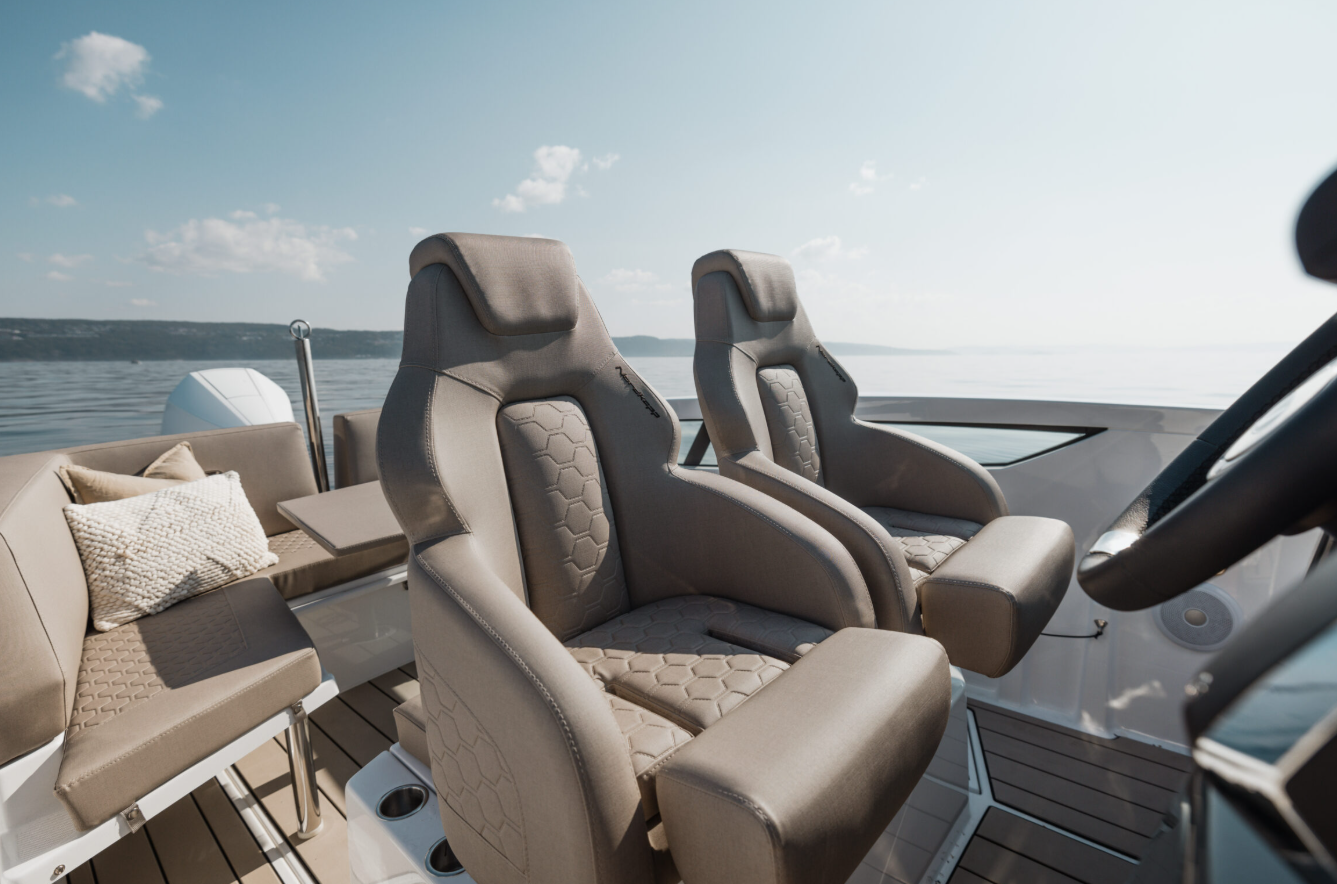
Modern Designs Are Moving Beyond Traditional Colors
Marine interiors are also changing visually.
Classic white and navy combinations remain popular, but owners increasingly have access to wider palettes and textures.
Modern options can include:
- Light gray and charcoal
- Cream and navy
- Beige and blue
- White with contrasting piping
- Neutral colors with textured inserts
These combinations can refresh an older interior without changing its basic layout.
Easy Cleaning Is a Key Consideration
Marine seating encounters many sources of dirt.
Sunscreen, food, drinks, sand, salt, and dust can accumulate during regular use.
A boat upholstery material that allows straightforward cleaning can make routine maintenance easier.
Owners should remove spills quickly and follow the manufacturer’s recommendations for cleaning specific surfaces.
Custom Details Can Change the Interior
Small design changes can have a significant effect.
Contrast stitching can highlight cushion shapes. Decorative piping can create cleaner visual boundaries. Two-tone panels can make standard seating appear more customized.
Custom embroidery can also add a personal element without requiring a complete redesign.
These details allow owners to update the character of a boat while maintaining practical functionality.
Helm Seats Remain a High Wear Area
The helm deserves particular attention during inspections.
Operators may spend long periods in the same seat, while the area can receive substantial sunlight and movement.
Owners should look for:
- Cracking
- Fading
- Loose seams
- Flattened foam
- Damaged piping
Early repairs can prevent small problems from developing into more extensive restoration work.
Covers Provide Protection Between Outings
Marine upholstery can deteriorate even when the boat is not being used.
A vessel sitting at the dock remains exposed to sunlight, rain, and airborne debris.
Proper covers can reduce this exposure.
However, covering wet cushions can trap moisture. Seating should therefore dry completely before owners cover the boat.
Repair Versus Full Reupholstery
Not every damaged seat needs complete replacement.
A small tear or loose seam may require a targeted repair. More extensive cracking, fading, or foam deterioration can make complete reupholstery a more practical option.
The condition of the existing seating should guide the decision.
Professional Installation Remains Important
Material selection is only one part of the process.
Accurate measurements, properly fitted covers, strong stitching, and clean finishing can all influence how the upholstery performs.
Professional installation can help ensure that a new boat upholstery material fits correctly and works with the original construction of the seating.
What Owners Should Consider Next
Before starting an upholstery project, owners can inspect every seating area and identify the most exposed or damaged sections.
They should then consider:
- How the boat is used
- Which seats receive the most sunlight
- How much water exposure occurs
- Whether the existing foam remains supportive
- How much maintenance the owner wants to perform
- Which colors complement the interior
This approach can make the final material choice more practical.
Final Thoughts
Boat interiors are becoming an increasingly important part of vessel maintenance and modernization. Owners do not always need a complete renovation to make a noticeable improvement.
The right boat upholstery material can help improve comfort, protect seating, simplify maintenance, and give an older interior a fresh appearance. By considering environmental exposure, usage, cushioning, design, and installation together, boat owners can make smarter decisions and keep their vessels enjoyable for years to come.